
Histamine Intolerance and the Gut Connection: Root Causes, Symptoms, and Healing Support
Why Histamine Overload Is Rarely Just About Food
If you feel like your body has become reactive to everything, food, stress, wine, leftovers, your environment — you are not imagining it.
Histamine intolerance and histamine overload are often misunderstood. Many women are told to simply avoid high-histamine foods.
But histamine overload is rarely just about the food.
It is about the gut.
What Is Histamine?
Histamine is a natural chemical made by mast cells and is involved in:
Immune defense
Inflammation signaling
Stomach acid production
Neurotransmitter communication
Wakefulness and alertness
Histamine plays an important role in digestion, immunity, and brain function. In healthy amounts, it is protective and necessary.
Problems arise when histamine builds up faster than your body can break it down.
This buildup is often referred to as histamine intolerance or histamine overload.
Common Symptoms of Histamine Overload
Histamine symptoms are frequently mistaken for food allergies, IBS, anxiety disorders, or hormone imbalance.
Common symptoms include:
Bloating and digestive discomfort
Headaches or migraines
Flushing or facial redness
Hives or itchy skin
Anxiety or racing thoughts
Heart palpitations
Nasal congestion
PMS flares
Loose stools or urgency
If you’ve ever thought, “I suddenly react to everything,” your gut may be involved.
The Gut Is the Control Center for Histamine
Your gut regulates histamine levels in three major ways:
1. The Gut Microbiome
Certain bacteria in the gut produce histamine.
Other beneficial bacteria help degrade and regulate it.
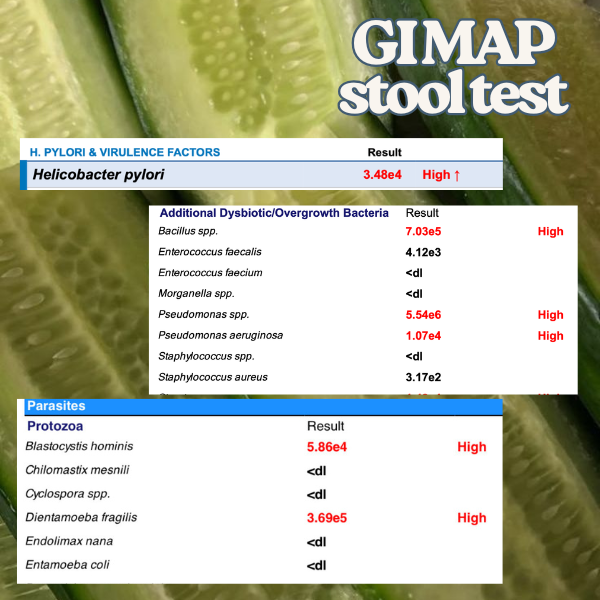
When there is dysbiosis (microbial imbalance), histamine-producing bacteria can dominate.
Common contributors include:
Past antibiotic use
Chronic stress
SIBO
H. pylori
Parasites
Mold exposure
When we see histamine symptoms, we always assess the microbiome.
2. The Gut Lining
A healthy intestinal lining acts as a selective barrier.
When the gut lining becomes inflamed or permeable, histamine can move more freely into circulation — amplifying symptoms like:
Skin flares
Anxiety
Headaches
Systemic inflammation
Histamine symptoms are often a sign of underlying gut inflammation.
3. DAO Enzyme Production
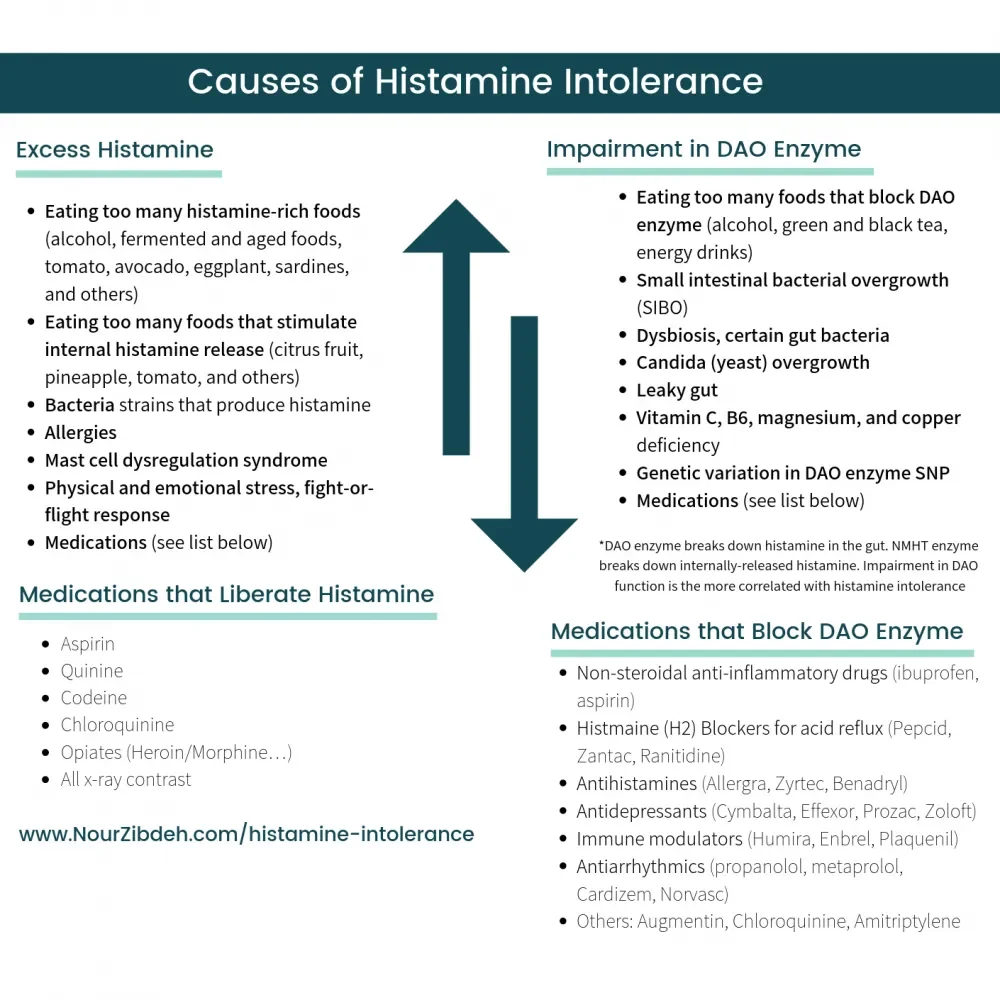
Diamine Oxidase (DAO) is the primary enzyme that breaks down histamine from food.
DAO is produced mainly in:
The small intestine
The ascending colon
The kidneys
If the small intestine lining (hello leaky gut) is inflamed or damaged, DAO production may decrease, leaving you with more circulating histamines.
Lower DAO levels can lead to higher circulating histamine — even if your diet has not changed.
This is why many women say, “I used to tolerate these foods… and now I can’t.”
It is not random. It is functional.
Why a Low Histamine Diet Is Not the Full Solution
Reducing high histamine foods can temporarily lower your symptom load.
But if we do not address:
Gut inflammation
Microbial imbalances
Motility issues
Hormonal influences, especially estrogen
Nutrient deficiencies such as Vitamin B6, copper, and Vitamin C
Symptoms often return when foods are reintroduced.
The goal is not lifelong restriction.
The goal is rebuilding tolerance and resilience.
The Estrogen–Histamine Connection in Women
Estrogen stimulates histamine release.
Histamine can also stimulate more estrogen.
This creates a feedback loop that may show up as:
PMS flares
Mid-cycle headaches
Heavier periods
Anxiety before menstruation
Skin breakouts
For women in their 30s, 40s, and perimenopause, this connection becomes especially relevant.
Histamine is not just a food issue.
It is a gut-hormone-immune conversation.
How We Address Histamine Overload at The Soulful Sprout
At The Soulful Sprout, we do not guess.
We assess.
Functional testing may include:
Comprehensive stool analysis
Organic acids testing
Mycotoxin screening
Nutrient markers
Hormone testing when indicated
From there, we build a phased, root-cause plan that may include:
Microbiome rebalancing
Gut lining repair
Motility support
Nervous system regulation
Targeted nutrients to support DAO function
Temporary histamine-modulating support
Sometimes a short-term low histamine framework is helpful — but always with the intention of restoring tolerance.
Ready to Understand Your Histamine Triggers?
If you are tired of guessing.
If you feel reactive to foods you used to tolerate.
If you have been told to “just avoid everything” without understanding why.
It is time to go deeper.
The Histamine Healing Guide was created for those who want clarity, not confusion.
Inside the guide, you will learn:
What histamine actually is and why it builds up
The gut-histamine connection is explained clearly
A practical low histamine framework without fear
Supportive nutrients for DAO and mast cell balance
How to approach reintroductions strategically
The hormone connection most women are never told about
This is not a restrictive food list.
It is a roadmap toward rebuilding tolerance and resilience.
You deserve a body that feels steady, not reactive.
Download the Histamine Healing Guide Here
Is This You?
You may benefit from deeper support if you:
Feel reactive to foods that once felt safe
Notice that symptoms fluctuate with your menstrual cycle
Experience digestive discomfort alongside anxiety
Have “normal labs” but ongoing inflammatory symptoms
Histamine is not the problem.
It is often the messenger.
And your gut may be asking for deeper support.
If you are ready to investigate root causes through comprehensive testing and personalized care, explore our Digestive Reset Program or book a connection call to discuss next steps.
You do not have to navigate this alone.